

· By Dahlia Rizk
How Much Does a Car Seat Cost? A Simple Price Guide for Parents
Quick Answer
A car seat can cost anywhere from under $100 for a basic model to several hundred dollars for a premium seat with extra features. The final price depends on the type of car seat, the brand, the weight and height limits, the materials, the installation features, and whether it is part of a travel system.
Most families will buy more than one type of car seat as their child grows. A newborn may start in an infant car seat, then move to a rear-facing convertible car seat that can be turned forward as they grow, then eventually move up to a booster seat.
The most important thing to remember is that the “best” car seat is not always the most expensive one. The best car seat is one that fits your child, fits your vehicle, is installed correctly, and is used correctly every ride.
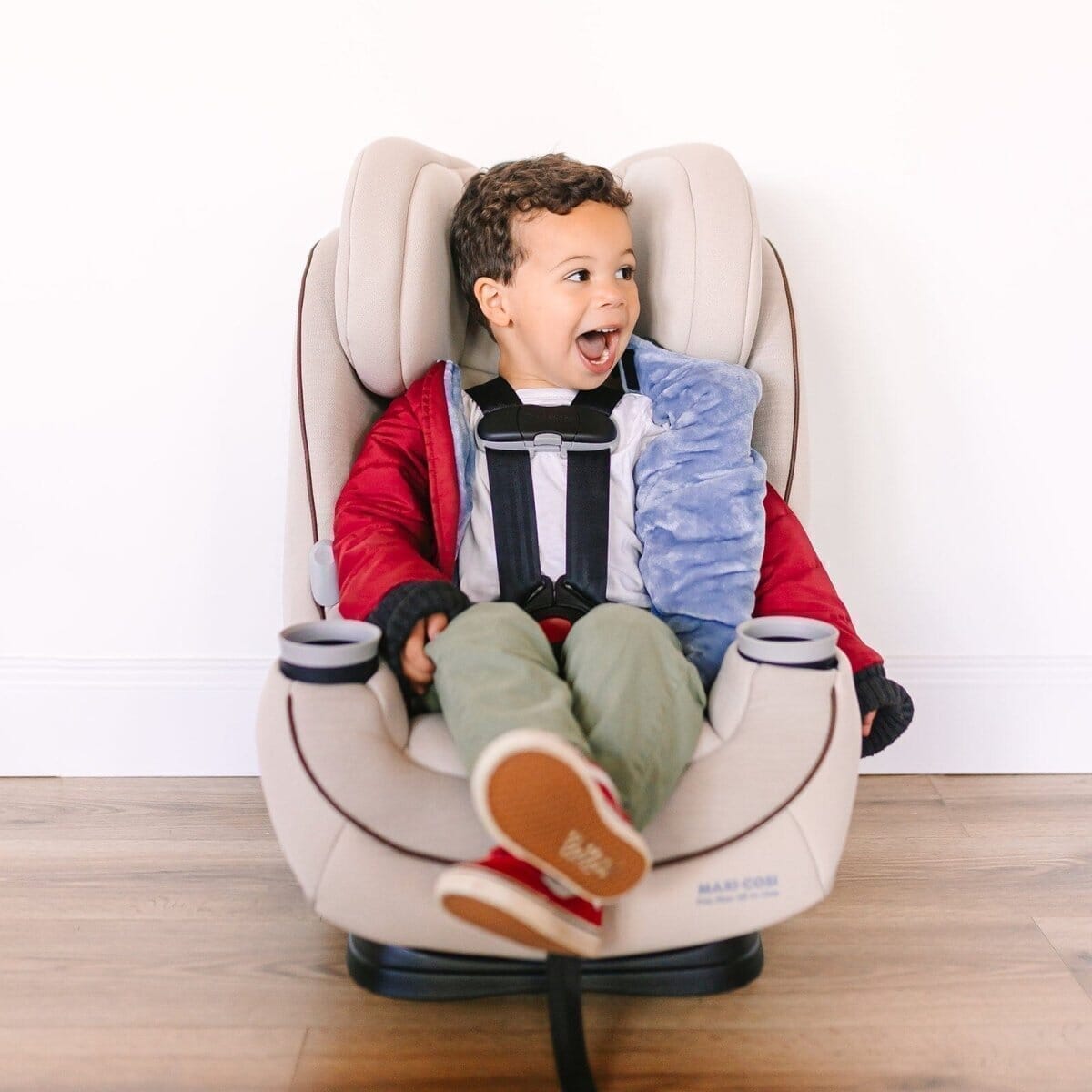
For cold-weather rides, Buckle Me Baby Car Seat Coats and Buckle Me Baby Car Seat Blankies can help keep little ones warm without adding unsafe bulk under the harness.
How Much Does a Car Seat Usually Cost?
Car seat prices vary a lot, but most fall into a few general ranges:
- Budget car seats: around $60 to $150
- Mid-range car seats: around $150 to $300
- Premium car seats: around $300 to $600 or more
- Travel systems with stroller and infant seat: often around $250 to $700 or more
These are general price ranges, and prices can change based on sales, retailers, colors, features, and brand availability.
A higher price can sometimes mean added convenience, nicer fabrics, easier installation, longer use, rotating features, or stroller compatibility. But every car seat sold in the United States has to meet federal safety standards, so price alone should not be the only deciding factor.
What Affects the Cost of a Car Seat?
The cost of a car seat depends on more than just the brand name. Two seats can look similar but have very different prices because of how they are designed.
Common factors that affect price include:
- Car seat type
- Brand
- Weight and height limits
- Installation system
- Fabric quality
- Padding and comfort
- Cup holders or storage
- Machine-washable covers
- Anti-rebound bars or load legs
- Rotation features
- Stroller compatibility
- How long the seat can be used
A simple seat that stays in the car and has basic features will usually cost less than a rotating all-in-one seat or a travel system that includes both a stroller and infant carrier.
Infant Car Seat Cost
An infant car seat is usually the first seat parents buy for a newborn. These seats are rear-facing only and often have a carrier handle, so you can click the seat in and out of a base.
Infant car seats are popular because they:
- Fit newborns well
- Can be carried in and out of the car
- Often click into compatible strollers
- Usually come with a stay-in-car base
- Make short transfers easier
Infant car seats can range from budget-friendly options to premium models with added features. A less expensive infant seat may still be safe when used correctly, while a higher-priced one may offer easier installation, lighter weight, better fabrics, or stroller compatibility.
If you live somewhere cold, remember that a baby should not wear a bulky coat or thick puffy layer under the car seat harness. Instead, buckle the harness snugly and use a safer warmth option like a Buckle Me Baby Car Seat Blankie over the harness.
Convertible Car Seat Cost
A convertible car seat is designed to be used rear-facing first and then forward-facing later. Some families start with a convertible seat from birth, while others switch to one after their baby outgrows the infant car seat.
Convertible car seats often cost more than basic infant seats, but they last longer due to longer height and weight limits that they cover more stages.
Convertible seats may be worth considering if you want:
- Longer rear-facing use
- A seat that stays installed in the car
- Higher height or weight limits
- A longer overall lifespan
- Fewer seat changes over time
The tradeoff is that convertible seats are usually not portable like infant carriers. You typically leave them installed in the vehicle.
All-in-One Car Seat Cost
An all-in-one car seat is designed to cover multiple stages, often from infant to rear-facing to forward-facing to booster mode. These seats usually cost more upfront, but they may reduce the number of seats you need to buy later.
All-in-one seats can be helpful for families who want:
- One seat for multiple stages
- Longer use from a single purchase
- Higher weight and height limits
- Fewer upgrades over time
That said, an all-in-one seat may not be the perfect fit for every newborn, every car, or every family. Some are bulky, some are harder to move between vehicles, and some may not fit small babies as comfortably as a dedicated infant seat.
Booster Seat Cost
Booster seats are generally less expensive than infant or convertible car seats. They are used when a child has outgrown a forward-facing harness seat but is not yet big enough for the adult seat belt to fit correctly.
Booster seats can be:
- Backless boosters
- High-back boosters
- Combination harness-to-booster seats
A basic booster may be fairly affordable, while a high-back booster with extra padding, cup holders, and latch connectors may cost more.
Is an Expensive Car Seat Safer?
Not necessarily. A more expensive car seat is not automatically safer just because it costs more.
Higher-priced seats may offer:
- Easier installation
- More comfortable fabrics
- Extra padding
- Longer use
- Rotating convenience
- Better stroller compatibility
- Easier cleaning
- Added convenience features
But a lower-cost car seat that fits your child, fits your vehicle, and is installed correctly can still be a safe option.
The real question is not “What is the most expensive car seat?” It is:
Which car seat can I install correctly and use correctly every single ride?
If a less expensive seat is easier for you to install properly and tighten correctly, it may be the better choice for your family.
Should You Buy a Used Car Seat?
Car seats are a lifesaving device. Be very careful with used car seats. A used seat may seem like a way to save money, but there are risks if you do not know the seat’s full history.
Avoid a used car seat if:
- You do not know whether it has been in a crash or has been washed
- It is expired
- It is missing labels or instructions
- It has missing parts
- The harness is damaged
- The seat has been recalled and not fixed
- You do not fully trust the source
A used car seat from a trusted friend or family member may be okay if you can confirm its full history, expiration date, recall status, and condition. But if you are unsure, it is safer to buy new.
How to Save Money on a Car Seat
Car seats can be expensive, but there are ways to save without cutting corners on safety.
Ways to save include:
- Watch for sales around major shopping holidays
- Check baby registry completion discounts
- Look for retailer car seat trade-in events
- Compare prices across stores
- Choose a seat that lasts through more stages
- Avoid paying for features you do not need
- Ask about local car seat assistance programs
- Register your car seat so you receive recall notices
Some retailers also run trade-in events where parents can recycle an old car seat and receive a discount toward a new one.
What Car Seat Should You Buy First?
For many newborns, parents start with either an infant car seat or a convertible car seat.
Infant car seat
Best for:
- Newborn fit
- Easy carrying
- Stroller compatibility
- Clicking in and out of a base
- Short transfers from car to home
Convertible car seat
Best for:
- Longer use
- Staying installed in the car
- Extended rear-facing
- Families who do not need a carrier
- Reducing the number of seat purchases
If you are not sure which one to choose, think about your daily routine. If you want to carry your sleeping baby from the car to the house, an infant seat may feel easier. If you want one seat that lasts longer and do not need portability, a convertible seat may make more sense.
What Features Are Worth Paying More For?
Some features are nice, but not every family needs all of them. Think about what will actually make the seat easier to use every day.
Features that may be worth it:
- Easy harness tightening
- Clear recline indicators
- Simple installation system
- Machine-washable cover
- Higher rear-facing limits
- Comfortable padding
- Good fit in your vehicle
- No-rethread harness
- Stroller compatibility, if you need it
Features you may not need:
- Premium fabrics
- Designer colors
- Extra cup holders
- Rotation, if the seat is too bulky for your car
- Travel system bundle, if you already have a stroller
- Extra accessories that do not solve a real problem
A feature is only worth paying for if it helps you use the seat safely and consistently.
Do You Need More Than One Car Seat?
Some families need more than one car seat, especially if a child rides in multiple vehicles.
You may need an extra seat if:
- Both parents do daycare pickup
- Grandparents help with transportation
- You regularly use a second vehicle
- You do not want to reinstall the seat to move it from car to car
- You have more than one child in car seats
A second seat does not have to be the same model as the first. Some families use a premium seat in the main car and a more affordable seat in the second car.
Do You Need a Car Seat Base?
Infant car seats often come with one base, and some families buy an extra base for another vehicle. Extra bases can add to the total cost.
A second base may be helpful if:
- Your baby rides in two cars often
- You want fast click-in installation
- You want to avoid reinstalling the base
- Another caregiver regularly drives your baby
Some infant car seats can also be installed without the base using the vehicle seat belt, but you should only do this according to the car seat manual.
Budgeting for Car Seat Accessories
Some accessories are useful, but many are unnecessary or even unsafe if they interfere with the harness or did not come with the seat.
Helpful accessories may include:
- Extra car seat base from the same manufacturer
- Vehicle seat protector, if allowed by the car seat manual
- Car seat-safe blanket over the harness
Avoid accessories that interfere with safety:
- Thick strap covers that did not come with the seat
- Extra padding behind the baby
- Head supports not approved by the manufacturer
- Bulky coats under the harness
- Aftermarket products that change the harness fit
For cold weather, skip the bulky coat and choose car seat-friendly warmth instead. Buckle Me Baby’s Buckle Me Baby Car Seat Coats and Buckle Me Baby Car Seat Blankies are made for that exact problem.
What About Car Seat Coats and Blankets?
The car seat itself is only one part of safer travel. What your child wears in the car seat matters too.
A bulky winter coat can create extra space under the harness. In a crash, that padding can compress, leaving the harness too loose. That is why parents are often told to avoid thick puffy coats under car seat straps.
Instead, use:
- Thin, warm layers
- A car seat coat like Buckle Me Baby Coats
- A blanket over the harness
- A car seat blanket designed for safer warmth
Buckle Me Baby’s Car Seat Coats and Car Seat Blankies are designed to help keep kids warm while still allowing the harness to fit more safely.
Car Seat Cost by Stage
Here is a simple way to think about car seat costs over time.
Newborn stage
You may buy:
- Infant car seat
- Extra base
- Car seat blanket
- Stroller or travel system
Baby and toddler stage
You may buy:
- Convertible car seat
- Car seat-safe coat
- Extra seat for a second vehicle
Preschool and big kid stage
You may buy:
- Forward-facing harness seat
- Booster seat
- Extra booster for another vehicle
Not every family buys every item. Some seats last through multiple stages, and some families skip the infant carrier and start with a convertible seat.
How to Choose the Right Car Seat for Your Budget
Start with safety and fit, then think about convenience.
Ask these questions:
- Does this seat fit my child’s current height and weight?
- Does it fit my vehicle well?
- Can I install it correctly?
- Can I tighten the harness easily?
- Does it work for my daily routine?
- How long will my child be able to use it?
- Are the extra features actually useful?
- Is the cover easy to clean?
- Can I afford a second seat if needed?
- Will this seat work with winter clothing safely?
The right car seat is the one you can use correctly every day, not necessarily the one with the longest feature list.
FAQs About Car Seat Costs
How much does an infant car seat cost?
An infant car seat can range from under $100 for a basic model to several hundred dollars for premium models or travel system bundles. The price depends on brand, features, stroller compatibility, and included base.
How much does a convertible car seat cost?
Convertible car seats often cost more than basic infant seats because they can be used rear-facing and forward-facing. Prices vary widely depending on features, size limits, and brand.
Is a $500 car seat worth it?
A $500 car seat may be worth it if the features solve real problems for your family, such as easier installation, better fit in your vehicle, rotation, or longer use. But it is not automatically safer just because it costs more.
Are cheap car seats safe?
A lower-cost car seat can be safe if it meets safety standards, fits your child, fits your vehicle, and is used correctly. Do not buy a seat just because it is cheap, but do not assume the most expensive seat is always the best either.
Do I need to buy a new car seat for every baby?
Not always. You may be able to reuse a car seat if it is not expired, has not been in a crash, has no missing parts, has not been recalled without repair, and still has the manual and labels. If you are unsure, buy new.
What else should I budget for besides the car seat?
You may also need an extra base, a second car seat for another vehicle, car seat-safe winter gear, stroller compatibility, or travel accessories. For cold-weather safety, consider Car Seat Coats or Car Seat Blankies.
Final Thoughts
Car seat costs can range from budget-friendly basics to premium models with extra features, but price does not tell the whole story. The best car seat is one that fits your child, fits your vehicle, and is easy for you to use correctly every ride.
Once you choose the right seat, make sure your baby or child is dressed safely for the harness. For cold weather, Buckle Me Baby can help with car seat-friendly warmth that avoids bulky layers under the straps:
Share:
Shop clothes that makes your life easier


Let customers speak for us

Jenny B.
Great invention
As a grandma, I am constantly looking for products that will make every day life easier. The car seat blankie has been a game changer. No stopping because he kicked off his blanket and perfect for chilly mornings or when the AC is blaring! We absolutely love this!
Breezy Muslin Car Seat Blankets | Buckle Me Baby Blankies

Laura H.
I don't usually write reviews
But this is our 3rd winter with one of these coats, and they're a lifesaver. Slight learning curve when you first get one, but not having to take the coat on and off in the cold is worth it. It's also piece of mind that it won't fall off when driving or if in an accident (kiddo will be warm when waiting for first responders). We live in Chicago and the Toast is warm enough for quick errands and the Toasty is nicer for deep winter. We do have a larger parka coat if we spend more time outdoors.
Clearance Buckle Me Baby Car Seat Coat

Fransheska
Safest jacket for kids
I ordered a green toastier coat for my 1 year old. Now when I did receive it that there was a tear in the jacket. But customer service made it simple in easy to file a claim to receive another one which was great. I had 1 already for my son but it became to small. I love these coats though they make it easy to just buckle your child without removing the coat. As well it gives me the peace of mind knowing he is sitting safely in his car seat. Definitely would recommend and be riding another once this one get too small again.
Toastier Car Seat Coats

K.H.
A great way to save & give back!
Made upgrading a breeze!
Swoondle Trade Up Bag

Heather
Great coat for toddler
Love our car seat coat. This is our second year ordering and will be coming back again next year. Perfect for bringing kids out without having to take their coats on and off in the cold.
Toasty Car Seat Coat Different Color per size - FINAL SALE

Amy G.
Great product
This product is great. I was thinking about a coat for my grandson that he could wear in his car seat, and I was told about the Buckle Me Coats. It works great and keeps him warm.
Toasty Car Seat Coat

Roxann B.
Awesome
It's a Christmas gift for my granddaughter 😁
Toast Car Seat Coat
Cheyenne B.
Definitely recommend
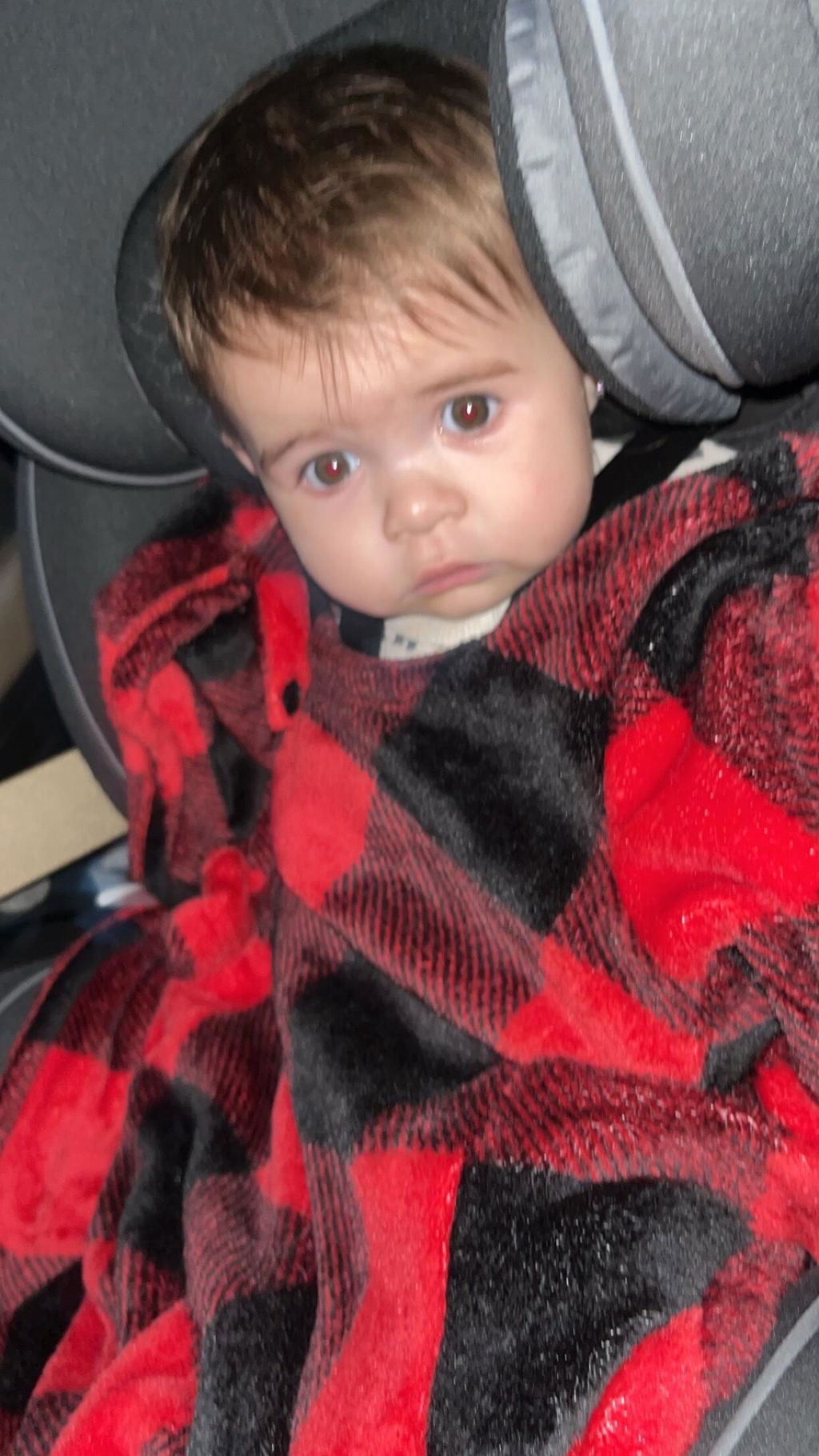
This is amazing I love how it soft and keeps her warm and cozy in her car seat. It easy covers over the car seat buckle and I love the plaid cover
Car Seat Blanket | Buckle Me Baby Blankies
Althea O.
Warm, convenient and love it
I work at the Turnpike and I get sick of seeing babies drug and just pajamas cause people don’t wanna waste time putting a coat on them. This is wonderful because I can wrap a baby in it. They’re still warm.
Car Seat Blanket | Buckle Me Baby Blankies
Madeline P.
Car seat coat
We live this jacket. It’s so convenient and comfortable for our little guy
Toasty Car Seat Coat

Jama L.
Amazing!
This is absolutely amazing.. kept our granddaughter toasty warm on a cold night kicking off the Christmas holiday in Tennessee!
Clearance 2025 Cozier Car Seat Blankie
Crystal G.
Warm
I was worried about how to keep my baby warm during the cold months in Ohio. I personally can warm up my car first but my sister cannot. I stumbled upon these coats and went back and forth. I bought a poncho and two other coats before I caved. I feel so much better that she is warm and safe in her car seat. I rarely write reviews, but this company offers 20% off for a review so if that tells you anything, I’ll be buying another one for next year-I wanted the discount.
Toast Car Seat Coat
Dev
Soft and warm
Just got the buckle me baby blanket the other day. It’s super soft and warm. I look forward to using it in the car seat and stroller to keep my little monster warm. I think I’m going to order a coat for her as well for those extra cold days!
Car Seat Blanket | Buckle Me Baby Blankies

Shaina
We love these coats!
We’ve always loved these coats first my daughter now for my son. They make buckling with a coat so much easier and safer and my kids are always warm!
Toastier Car Seat Coat Different Color per size - FINAL SALE
Stacey
I have ordered two of these coats for my daughter over the years and have now ordered one for my infant. It's so nice to know they're warm and safe!
Toast Car Seat Coat