

· By Dahlia Rizk
How Long Can a Baby Be in an Infant Car Seat?
Quick Answer
A baby can be in an infant car seat for the length of a necessary car ride, but the seat should be used mainly for travel, not as a regular place for sleep, lounging, or naps outside the car. For longer drives, plan regular breaks so your baby can come out of the seat, stretch, be changed, and be checked.
There is no single magic number that applies to every baby, every seat, and every trip. A short ride to the store is different from a long road trip. The safest approach is to use the car seat correctly while traveling, avoid leaving your baby in it longer than needed, and move your baby to a firm, flat sleep space when the ride is over.
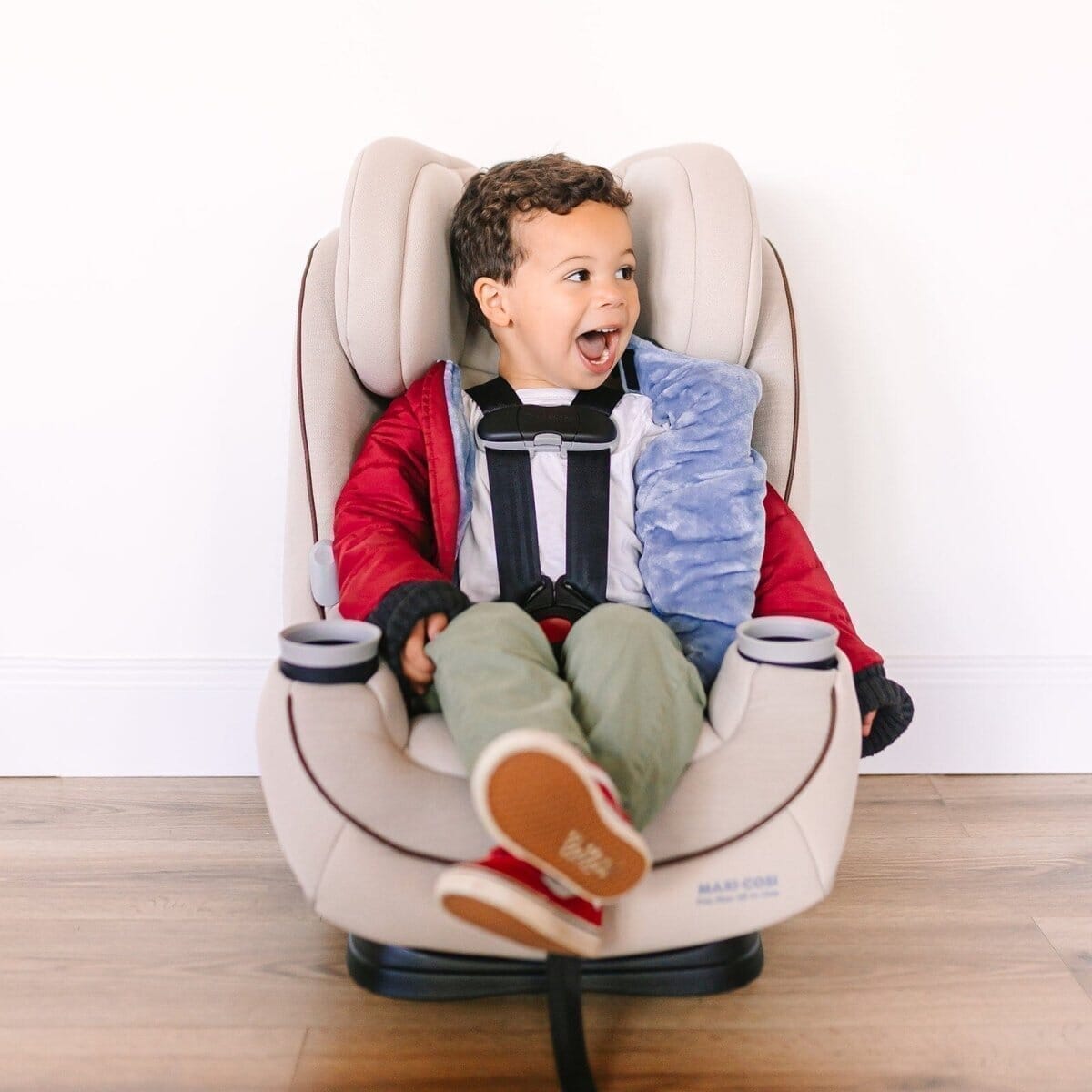
For cold-weather rides, Buckle Me Baby’s Car Seat Coats and Car Seat Blankies can help keep babies warm without adding bulky layers under the harness.
Why Infant Car Seat Time Matters
Infant car seats are made to protect babies in the car. They are not meant to replace a crib, bassinet, stroller, bouncer, or baby lounger.
A rear-facing infant car seat positions your baby at an angle. That angle is important for crash protection and safe travel, but it is not the same as lying flat on a firm sleep surface.
Too much time in an infant car seat can be a concern because:
- Newborns have limited head and neck control
- Babies can slump forward or sideways
- The semi-reclined position can affect comfort
- Long stretches can put pressure on the back of the head
- Babies need chances to move, stretch, feed, and be changed
- Car seats are not designed for routine sleep outside the car
The American Academy of Pediatrics recommends keeping children rear-facing as long as possible, until they reach the highest weight or height allowed by their car seat manufacturer. That guidance is about how long to keep using a rear-facing car seat stage, not permission to leave a baby sitting in the seat for long periods outside of travel.
Is There a 2-Hour Rule for Infant Car Seats?
You may hear parents talk about a “2-hour rule” for car seats. This is a common guideline many parents use for long drives: try not to keep a baby in the car seat for more than about two hours at a time without a break.
That does not mean every baby is automatically fine for exactly two hours, and it does not mean a baby should be placed in a car seat for two hours when travel is not necessary. It is better to think of it as a practical reminder:
For longer trips, build in breaks and do not leave your baby sitting in the car seat longer than necessary.
Newborns, premature babies, and babies with medical concerns may need more frequent breaks or special guidance from a pediatrician.
How Often Should You Take Breaks on Long Car Rides?
For longer car rides, plan regular stops so your baby can come out of the seat. Many families use a break every 1.5 to 2 hours as a practical starting point.
During a break, you can:
- Take baby out of the car seat
- Check their diaper
- Feed them if needed
- Let them stretch
- Check their temperature
- Check for red marks or discomfort
- Make sure the harness and seat are still set up correctly before leaving again
If your baby is very young, fussy, slumping, overheating, or recovering from illness, stop sooner.
Can a Baby Sleep in an Infant Car Seat?
Babies often fall asleep in infant car seats during car rides. That is normal. The issue is what happens when the ride ends.
When you arrive, move your baby to a safe sleep space. A safe sleep space is usually a crib, bassinet, or play yard with a firm, flat mattress and no loose blankets, pillows, or soft items.
A car seat should not be used as a routine sleep spot outside the car. The seat is designed for travel, and the angle can change when the carrier is placed on the floor, couch, bed, or other surface leading to risk of head slump and positional asphyxiation.
What If Baby Falls Asleep Right Before You Get Home?
This is one of those real-life parent problems. Your baby finally falls asleep in the car, and then you pull into the driveway.
Even though it can feel painful to wake a sleeping baby, the safer choice is usually to move them to a flat sleep space after the ride. If they wake up, they wake up. Safety comes first.
If your baby often falls asleep during errands or travel, try planning the trip around nap timing when possible, and have a simple transfer routine ready when you get home.
For easier transitions dress your baby in a car seat sleep sack before you hit the road. The sleep sack is designed for the car seat and makes transitioning them into the crib one step easier.
How Long Can a Newborn Be in an Infant Car Seat?
Newborns need extra care because they have less head and neck control. For newborns, keep car seat time as limited as practical and avoid using the infant seat outside of travel.
For newborn car rides:
- Make sure the seat is installed at the correct recline angle.
- Make sure the harness is snug.
- Keep the chest clip at armpit level.
- Avoid bulky clothing under the harness.
- Check baby’s head position often.
- Stop for breaks on longer rides.
- Move baby to a flat sleep surface after travel.
If your baby was premature, had breathing concerns, or has any medical condition, ask your pediatrician how long they can safely ride in their car seat.
How Long Can a Baby Stay in a Car Seat While Running Errands?
If you are running errands, try to avoid keeping your baby in the infant car seat for the entire outing unless they are actively being transported.
For example, if you drive to a store, shop for 45 minutes, drive to another store, shop again, then drive home, your baby may end up spending a long stretch in the car seat even though the actual driving time was short.
Instead, consider:
- Using a stroller with a safe bassinet or approved seat
- Wearing your baby in a properly fitted carrier
- Taking short breaks between errands
- Doing pickup or delivery for larger trips
- Keeping errands short when your baby is very young
If you are shopping with your baby, remember not to place the infant car seat on top of a shopping cart. Keep the car seat low and secure, use a stroller, or use a baby carrier.
Buckle Me Baby’s Safety Must Haves collection can help with everyday errands, parking lots, and on-the-go routines.
When Should You Take Baby Out of the Infant Car Seat?
Take your baby out of the infant car seat when the car ride is over, when they need care, or when they have been in the seat for a long stretch.
Take your baby out if:
- The ride is over
- They need to eat
- They need a diaper change
- Their head is falling forward
- They seem uncomfortable
- They are too hot or too cold
- They have been sitting for a long time
- You are no longer actively traveling
A car seat is one of the most important pieces of safety gear you own, but it should still be used for its main purpose: protecting your baby during travel.
Signs Your Baby Needs a Break From the Car Seat
Sometimes your baby will let you know they need a break. Other times, you need to check.
Watch for:
- Crying that does not settle
- Sweating or flushed skin
- Cold hands and feet with a cool chest or back
- Slumping forward
- Chin falling toward the chest
- Twisted or uncomfortable positioning
- Red marks from straps
- A full diaper
- Feeding cues
- General fussiness after a long stretch
If you are worried about your baby’s breathing, color, alertness, or positioning, stop safely and check them right away.
How to Make Long Car Rides Safer With a Baby
Long drives with a baby take planning. The goal is not just to get there quickly. The goal is to get there safely.
Before the trip
- Check the car seat installation
- Check the recline angle
- Adjust the harness height if needed
- Pack extra diapers and wipes
- Bring a change of clothes
- Plan stops into the drive
- Avoid bulky layers under the harness
- Keep feeding supplies easy to reach
During the trip
- Stop regularly
- Take baby out during breaks
- Check diaper and temperature
- Watch for head slump
- Keep the harness snug
- Avoid feeding baby while the car is moving
- Never leave baby alone in the car
After the trip
- Move baby out of the car seat
- Transfer them to a safe sleep space if they are sleeping
- Check for diaper leaks or blowouts
- Let baby stretch and move
If diaper blowouts tend to happen during car rides, Buckle Me Baby’s Blockerz can help protect clothes, car seats, and travel gear.
What Should Baby Wear in an Infant Car Seat?
Your baby should wear thin, fitted layers in the car seat. Avoid bulky coats, puffy jackets, thick snowsuits, or heavy layers under the harness.
Bulky clothing can make the harness seem tight when it is not actually snug against your baby’s body. In a crash, that extra padding can compress and leave the harness too loose.
Better car seat clothing options include:
- Thin pajamas
- Fitted onesies
- Lightweight fleece
- Thin warm layers
- A car seat coat by Buckle Me Baby
- A blanket over the harness after buckling
For winter rides, Buckle Me Baby’s Car Seat Coats are designed to help keep little ones warm without the unsafe bulk of a traditional winter coat under the harness.
For infants, Car Seat Blankies are another helpful option for warmth over the harness.
How Long Can a Baby Use an Infant Car Seat Before Switching Seats?
This is a different question from how long a baby can sit in the car seat during the day.
A baby can use an infant car seat until they outgrow the seat’s height or weight limit, or until the seat manual says they no longer fit. Infant car seats vary by model, so always check your specific seat.
Your baby may be ready to move from an infant car seat to a rear-facing convertible car seat when:
- They reach the infant seat’s maximum weight
- They reach the infant seat’s maximum height
- Their head is too close to the top of the seat shell based on the manual
- They no longer fit comfortably
- The seat manual says they have outgrown it
Many infant carriers support babies up to around 30 to 35 pounds, depending on the model, but the exact limit depends on your car seat.
Infant Car Seat Safety Checklist
Use this quick checklist before every ride:
- Car seat is installed tightly.
- Recline angle is correct.
- Baby’s back and bottom are all the way back.
- Harness straps are at the correct height.
- Harness straps are not twisted.
- Harness is snug and passes the pinch test.
- Chest clip is at armpit level.
- No bulky clothing is under the harness.
- Baby’s head and airway look upright and not slumped over.
- Baby is not left in the seat longer than needed.
FAQs About How Long Babies Can Be in Infant Car Seats
How long can a newborn be in an infant car seat?
Keep newborn car seat time as limited as practical and use the seat mainly for travel. For longer rides, stop regularly so your newborn can come out of the seat, be checked, fed, changed, and repositioned.
Is it okay for a baby to sleep in an infant car seat?
It is common for babies to fall asleep during car rides. When the ride is over, move your baby to a firm, flat sleep surface instead of using the car seat for routine sleep.
Can a baby be in a car seat for 2 hours?
Many parents use two hours as a practical limit before taking a break on long drives, but every baby is different. Younger babies, premature babies, or babies with medical concerns may need more frequent breaks.
How long can a baby stay in a car seat during errands?
Try not to keep your baby in the car seat longer than necessary. If you are out running errands, consider using a stroller, baby carrier, or breaks between stops instead of leaving your baby in the car seat for the whole outing.
When should I move my baby out of the infant car seat?
Move your baby out of the infant car seat when they reach the height or weight limit, when the manual says they have outgrown it, or when their head is too close to the top of the shell according to the seat instructions.
What if my baby’s head falls forward in the car seat?
Stop safely and check the recline angle, harness fit, and your baby’s position. Do not add pillows, head straps, or aftermarket supports unless your car seat manufacturer specifically allows them.
Final Thoughts
An infant car seat is essential for safe travel, but it should not become your baby’s regular nap spot, lounger, or place to spend long stretches outside the car. Use it for car rides, take breaks during longer trips, and move your baby to a firm, flat sleep space when the ride is over.
For safer, cozier travel days, Buckle Me Baby has helpful options for warmth, errands, and messy moments:
Share:
Shop clothes that makes your life easier


Let customers speak for us
Anonymous
Great!
Great!
Buckle Me Baby

Anonymous
Perfect
Perfect for cold Alaska winters!
Car Seat Blankies

Zofia
Cute colours and the jammies really work, no mess
Cute colours and the jammies really work, no mess in the car seat!
Blowout Blockerz Bamboo Jams
Anonymous
great
great idea
Car Seat Blankies
Karen E.
Love everything about it including the price and
Love everything about it including the price and quick delivery
Car Seat Blankies

Krystin
I love this car seat blanket! It is so warm
I love this car seat blanket! It is so warm and soft. My granddaughter enjoys wearing it on cold mornings in the car. Definitely very happy with this purchase!
Clearance 2025 Cozier Car Seat Blankie

Laura H.
I don't usually write reviews
But this is our 3rd winter with one of these coats, and they're a lifesaver. Slight learning curve when you first get one, but not having to take the coat on and off in the cold is worth it. It's also piece of mind that it won't fall off when driving or if in an accident (kiddo will be warm when waiting for first responders). We live in Chicago and the Toast is warm enough for quick errands and the Toasty is nicer for deep winter. We do have a larger parka coat if we spend more time outdoors.
Clearance Buckle Me Baby Car Seat Coat
Jama L.
Amazing!
This is absolutely amazing.. kept our granddaughter toasty warm on a cold night kicking off the Christmas holiday in Tennessee!
Clearance 2025 Cozier Car Seat Blankie

Esther G.
Great quality, great service
Shipping was super fast and the snowsuit feels like quality! I love the warm cuffs on the neck and sleeves. I got moonwalker so it can be gender nautral for future kids but it can pass as purple with certain lighting.
Infant Car Seat Snowsuits
Anonymous
Better than expected
I had the lightest version which was nice for all year, but with colder days coming I ordered this version and its better than expected. Definitely thick but not too heavy, well-made and baby loves it!
Clearance 2025 Cozier Car Seat Blankie

Aisha S.
Best pjs EVER!
I have tried bamboo pajamas from SO many different brands, but none are as good as the BMBC pjs. They're actually buttery soft, hold up extremely well in the wash, and my baby can wear them for so long due to the extendable arms/legs and stretchy material. My 14 month old is 95th percentile for height and weight and the 6/9 month BMBC pjs still fit him!!! Cannot recommend this company enough. And Dahlia, the owner, is so sweet and responsive.
Clearance Bamboo Jams

JoAnn H.
Adoreable
So cute and so soft
Wild Child Bamboo Jams

Amy a.M.P.
So cozy and warm!
This is so easy to use in the car and instantly warm.
Clearance Kids 2025 Coziest Car Seat Blankie
debi B.
Car seat blanket
great product! So soft and cozy bought for my 6 month old grandson. Had to roll the sleeves up a bit but it will fit him. Next winter too ! Would recommend !
Clearance Kids 2025 Coziest Car Seat Blankie
Gigi
“These are perfect”, says my granddaughter who has 12 month old twins. They are safe in their seatbelts and stay covered and warm. The Velcro in the back is great. She says to give these blankies a 5 star rating.
Clearance Kids 2025 Coziest Car Seat Blankie