

· By Dahlia Rizk
How to Use a Sleep Sack Safely: A Simple Guide for Parents
Quick Answer
A sleep sack is a wearable blanket that goes over your baby’s pajamas to help keep them warm during naps and bedtime. To use a sleep sack safely, choose the right size, dress your baby in comfortable layers underneath, zip or fasten it securely, and always place your baby on their back in a safe sleep space.
Sleep sacks are especially helpful because they give babies warmth without loose blankets in the crib. They can also make naps, bedtime, and car-to-crib transfers feel more consistent, especially for families who are on the go.
If you are looking for cozy options for naps, bedtime, and travel, Buckle Me Baby’s Blankets and Sacks collection is a great place to start.
What Is a Sleep Sack?
A sleep sack is a wearable blanket made for babies and toddlers. Instead of placing a loose blanket over your baby, you put your baby inside the sleep sack and zip or fasten it closed.
Most sleep sacks have:
- Openings for the neck and arms
- A closed bottom or roomy leg area
- A zipper, snaps, or other closure
- Soft fabric for warmth and comfort
- Different sizes for babies and toddlers
The main purpose of a sleep sack is to keep your baby warm while reducing the need for loose blankets in the crib.
How to Use a Sleep Sack Step by Step
Using a sleep sack is simple once you get the routine down.
1. Choose the right size
Start by choosing a sleep sack that matches your baby’s current height and weight. The neck opening should not be so loose that it can ride up over your baby’s face, and the sleep sack should not be so small that it restricts movement.
A good fit should feel secure around the upper body while still giving your baby room to move their hips and legs comfortably.
2. Dress your baby underneath
A sleep sack is usually worn over pajamas or a onesie. What your baby wears underneath depends on the temperature of the room and the thickness of the sleep sack.
Common options include:
- Short-sleeve onesie
- Long-sleeve onesie
- Footed pajamas
- Lightweight bamboo pajamas
- Warmer pajamas in colder weather
If your baby tends to get hot, use lighter layers. If the room is cooler, choose warmer pajamas or a slightly warmer sleep sack.
For soft layering options, you can also pair a sleep sack with cozy baby pajamas from Buckle Me Baby’s Bamboo Pajamas collection.
3. Put your baby into the sleep sack
Lay the sleep sack flat, place your baby inside, and guide their arms through the arm openings if the design has them. Then zip or fasten the sleep sack according to the product instructions.
Make sure:
- The zipper or snaps are fully secured
- The fabric is not bunched near your baby’s face
- The neck opening sits comfortably
- Your baby’s arms are positioned safely
- Your baby can move their legs naturally
4. Place your baby on their back
Once your baby is in the sleep sack, place them on their back in a safe sleep space. The crib, bassinet, or play yard should have a firm, flat mattress with a fitted sheet.
Avoid adding loose blankets, pillows, stuffed animals, or other soft items into the sleep space.
5. Check your baby’s temperature
After your baby has been sleeping for a bit, check their chest, back, or neck to see if they feel too hot or too cold. Hands and feet can feel cool even when your baby is comfortable, so the chest or back is usually a better place to check.
Signs your baby may be too warm include:
- Sweating
- Damp hair
- Flushed skin
- Rapid breathing
- Heat rash
- Fussiness that seems related to warmth
If your baby feels too warm, use lighter pajamas, a lighter sleep sack, or adjust the room temperature.
What Should a Baby Wear Under a Sleep Sack?
What your baby wears under a sleep sack depends on the room temperature, the sleep sack fabric, and your baby’s comfort.
In warmer weather
Your baby may only need:
- A short-sleeve onesie
- A lightweight sleeper
- Thin bamboo pajamas
In cooler weather
Your baby may need:
- Long-sleeve pajamas
- Footed pajamas
- A warmer sleep sack
- A base layer underneath pajamas
The goal is to keep your baby warm, but not overheated. A sleep sack should replace a loose blanket, not become one layer too many.
Can You Use a Sleep Sack for Naps?
Yes, sleep sacks can be used for naps as well as nighttime sleep. In fact, using a sleep sack for both can help create a familiar routine.
Your baby may start to recognize that the sleep sack means it is time to rest, which can make transitions to naps and bedtime a little smoother.
A simple nap routine could look like this:
- Change diaper.
- Dress baby in comfortable sleepwear.
- Put baby in the sleep sack.
- Read a short book or sing a song.
- Place baby on their back in the crib or bassinet.
A consistent routine can help babies understand what is coming next.
Can Babies Wear Sleep Sacks in the Car?
In general, sleep sacks are for safe sleep spaces like cribs, bassinets, and play yards. If you are putting your baby in a car seat, you need to make sure the car seat harness fits correctly and is not blocked or made loose by extra fabric.
A bulky sleep sack should not go under a car seat harness. Extra fabric between your baby and the harness can interfere with proper fit.
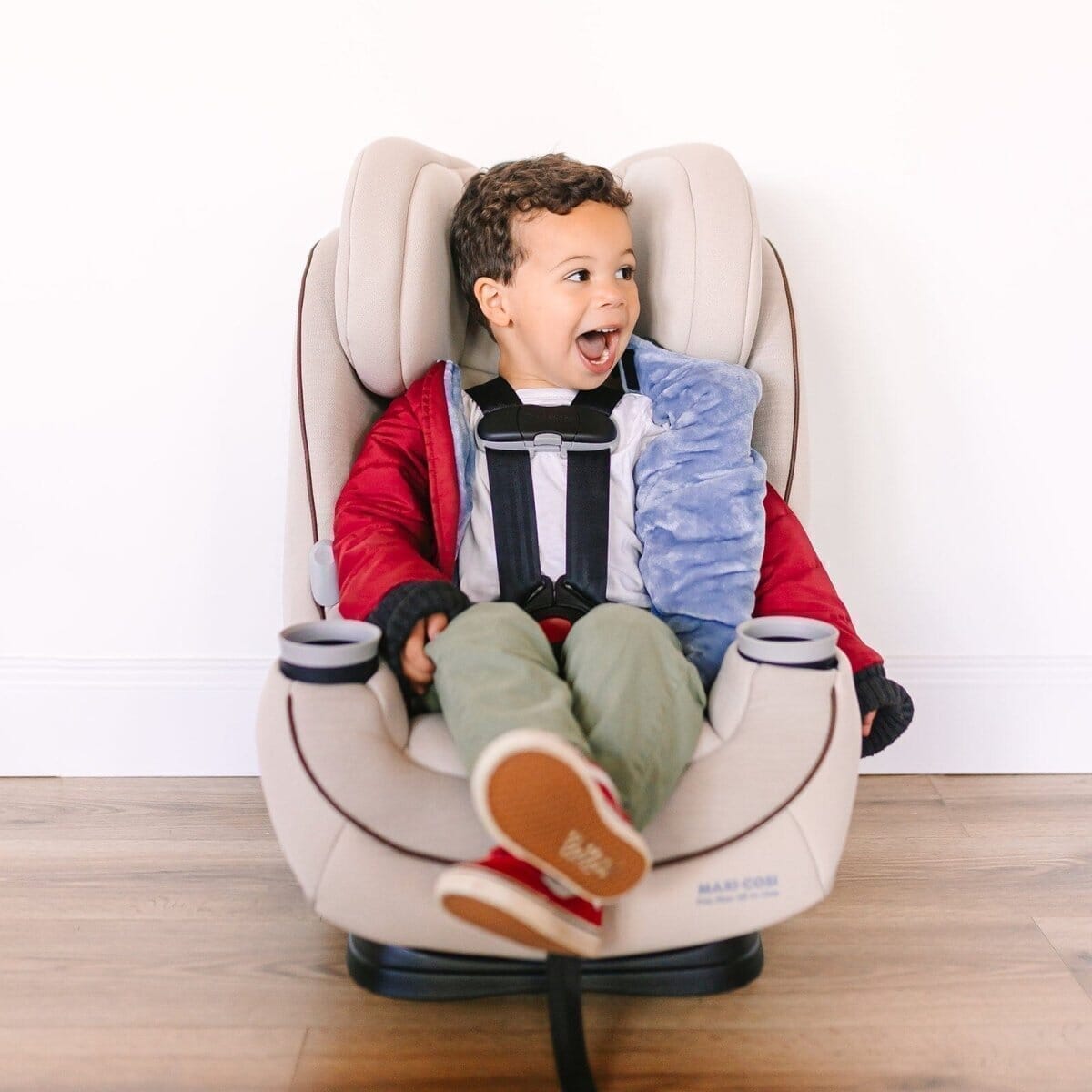
For car rides in cold weather, use car seat-safe warmth instead. Buckle your baby first, then add warmth over the harness when appropriate.
Helpful options include:
These options are designed with real parent problems in mind, like keeping babies warm during travel without relying on bulky layers under the harness.
When Can a Baby Start Using a Sleep Sack?
Many babies can use a sleep sack from the newborn stage, as long as the sleep sack is the correct size and design for their age, weight, and development.
The most important thing is fit. A newborn sleep sack should not be too loose around the neck or shoulders. If the sleep sack is too big, it may not be safe for your baby yet.
Always check the product’s size guide before using it.
When Should You Stop Using a Sleep Sack?
There is no single age when every child has to stop using a sleep sack. Many families use sleep sacks into the toddler stage, especially if their child moves around a lot during sleep or kicks off blankets.
You may stop using a sleep sack when:
- Your child outgrows the available sizes
- Your toddler is ready for a regular blanket
- Your child no longer likes wearing it
- The sleep sack affects mobility in a way that feels unsafe
- Your child begins climbing and the sleep sack makes that more difficult or awkward
For toddlers, look for sleep sacks that are designed specifically for their size and stage.
Sleep Sack vs. Swaddle: What’s the Difference?
A swaddle wraps around a baby’s body and usually keeps the arms snug. A sleep sack is more like a wearable blanket and usually allows the arms to be free.
Swaddle
Best for:
- Newborns
- Early weeks
- Babies who like a snug feeling
- Use before signs of rolling
Sleep sack
Best for:
- Babies who are no longer swaddled
- Naps and bedtime
- Keeping warm without loose blankets
- Older babies and toddlers
Once a baby shows signs of rolling, parents usually transition away from a swaddle and into a sleep sack that allows the arms to be free.
How to Choose the Right Sleep Sack
When choosing a sleep sack, think about your baby’s size, the season, and how you plan to use it.
Look for:
- Correct size for your baby’s height and weight
- Comfortable fabric
- Easy zipper or closure
- Room for natural leg movement
- Neck opening that is not too loose
- Fabric weight that matches your climate
- Easy washing and drying
If your baby has sensitive skin, soft breathable fabrics can make a big difference. For layering under a sleep sack, Buckle Me Baby’s Bamboo Pajamas are a helpful option because they are soft, comfortable, and easy to wear for sleep or travel days.
Sleep Sack Safety Tips
A sleep sack is easy to use, but safety still matters.
Do:
- Choose the correct size
- Place your baby on their back
- Use a firm, flat sleep surface
- Keep loose blankets out of the crib
- Check your baby’s temperature
- Follow the sleep sack’s care and use instructions
Don’t:
- Use a sleep sack that is too large
- Add loose blankets over your baby
- Use a bulky sleep sack under a car seat harness
- Overdress your baby underneath
- Use damaged products with broken zippers or loose fabric
Common Sleep Sack Mistakes to Avoid
Using the wrong size
A sleep sack that is too big can shift around too much. A sleep sack that is too small can be uncomfortable and restrictive. Always check the size guide.
Overheating the baby
Parents often worry about babies being cold, but overheating can be a concern too. Use the room temperature and your baby’s body temperature as your guide.
Treating it like a car seat layer
A sleep sack is not the same thing as car seat-safe outerwear. For car rides, make sure the harness is snug and avoid bulky fabric under the straps.
Adding extra blankets
The sleep sack is meant to replace a loose blanket. In most cases, you do not need to add another blanket on top in the crib.
FAQs About How to Use a Sleep Sack
Do babies wear pajamas under sleep sacks?
Yes, most babies wear pajamas, a sleeper, or a onesie under a sleep sack. The exact layer depends on the room temperature and the warmth of the sleep sack.
Can newborns use sleep sacks?
Yes, newborns can use sleep sacks if the sleep sack is designed for newborns and fits properly around the neck, shoulders, and body.
Should a sleep sack be tight or loose?
A sleep sack should be secure around the neck and upper body, but roomy enough around the hips and legs for natural movement.
Can a baby roll over in a sleep sack?
Many babies can roll in a sleep sack once they are developmentally ready, especially if their arms are free. Make sure the sleep sack is the right size and does not restrict movement.
Can toddlers use sleep sacks?
Yes, many toddlers use sleep sacks. Look for toddler sleep sacks that are made for their size and stage.
Do sleep sacks replace blankets?
Yes, that is one of their main purposes. A sleep sack gives warmth without needing a loose blanket in the crib.
Final Thoughts
A sleep sack is one of the simplest ways to keep your baby cozy during naps and bedtime without using loose blankets. Choose the right size, dress your baby appropriately underneath, place them on their back, and check their temperature so they stay comfortable.
For families who want cozy, practical options for naps, travel, and everyday routines, Buckle Me Baby’s Blankets and Sacks collection is a natural next step.
You can also pair sleep sacks with soft Bamboo Pajamas, or use Car Seat Blankies and Car Seat Coats when your baby needs safer warmth in the car.
Share:
Shop clothes that makes your life easier

Let customers speak for us
Anonymous
Great!
Great!
Buckle Me Baby

Anonymous
Perfect
Perfect for cold Alaska winters!
Car Seat Blankies

Zofia
Cute colours and the jammies really work, no mess
Cute colours and the jammies really work, no mess in the car seat!
Blowout Blockerz Bamboo Jams
Anonymous
great
great idea
Car Seat Blankies
Karen E.
Love everything about it including the price and
Love everything about it including the price and quick delivery
Car Seat Blankies

Krystin
I love this car seat blanket! It is so warm
I love this car seat blanket! It is so warm and soft. My granddaughter enjoys wearing it on cold mornings in the car. Definitely very happy with this purchase!
Clearance 2025 Cozier Car Seat Blankie

Laura H.
I don't usually write reviews
But this is our 3rd winter with one of these coats, and they're a lifesaver. Slight learning curve when you first get one, but not having to take the coat on and off in the cold is worth it. It's also piece of mind that it won't fall off when driving or if in an accident (kiddo will be warm when waiting for first responders). We live in Chicago and the Toast is warm enough for quick errands and the Toasty is nicer for deep winter. We do have a larger parka coat if we spend more time outdoors.
Clearance Buckle Me Baby Car Seat Coat
Jama L.
Amazing!
This is absolutely amazing.. kept our granddaughter toasty warm on a cold night kicking off the Christmas holiday in Tennessee!
Clearance 2025 Cozier Car Seat Blankie

Esther G.
Great quality, great service
Shipping was super fast and the snowsuit feels like quality! I love the warm cuffs on the neck and sleeves. I got moonwalker so it can be gender nautral for future kids but it can pass as purple with certain lighting.
Infant Car Seat Snowsuits
Anonymous
Better than expected
I had the lightest version which was nice for all year, but with colder days coming I ordered this version and its better than expected. Definitely thick but not too heavy, well-made and baby loves it!
Clearance 2025 Cozier Car Seat Blankie

Aisha S.
Best pjs EVER!
I have tried bamboo pajamas from SO many different brands, but none are as good as the BMBC pjs. They're actually buttery soft, hold up extremely well in the wash, and my baby can wear them for so long due to the extendable arms/legs and stretchy material. My 14 month old is 95th percentile for height and weight and the 6/9 month BMBC pjs still fit him!!! Cannot recommend this company enough. And Dahlia, the owner, is so sweet and responsive.
Clearance Bamboo Jams

JoAnn H.
Adoreable
So cute and so soft
Wild Child Bamboo Jams

Amy a.M.P.
So cozy and warm!
This is so easy to use in the car and instantly warm.
Clearance Kids 2025 Coziest Car Seat Blankie
debi B.
Car seat blanket
great product! So soft and cozy bought for my 6 month old grandson. Had to roll the sleeves up a bit but it will fit him. Next winter too ! Would recommend !
Clearance Kids 2025 Coziest Car Seat Blankie
Gigi
“These are perfect”, says my granddaughter who has 12 month old twins. They are safe in their seatbelts and stay covered and warm. The Velcro in the back is great. She says to give these blankies a 5 star rating.
Clearance Kids 2025 Coziest Car Seat Blankie