

· By Dahlia Rizk
How to Prevent Baby Blowouts: Simple Diaper Fit Tips That Actually Help
Quick Answer
To help prevent baby blowouts, start with the basics: make sure the diaper is the right size, pull the diaper high enough in the back, fasten the tabs snugly, and pull the leg cuffs out around your baby’s thighs.
Blowouts are common, especially with newborns and younger babies, but frequent blowouts usually mean something about the diaper fit, size, timing, or positioning needs to change.
If your baby tends to have blowouts in the car seat, stroller, crib, or during errands, Buckle Me Baby’s Blockerz can add another layer of protection when regular diapers are not enough.
Why Do Baby Blowouts Happen?
Baby blowouts happen when poop escapes the diaper instead of staying contained inside it. This usually happens because the diaper cannot handle the amount, pressure, or direction of the mess.
Common reasons include:
- The diaper is too small
- The diaper is too big
- The diaper is too loose
- The leg cuffs are tucked in
- The diaper is already too full
- Baby is sitting in a car seat or stroller
- Baby is lying down during sleep
- Baby is between diaper sizes
- Baby has loose stool
- The diaper brand does not fit your baby’s body shape well
Blowouts are frustrating, but they are also normal. Most parents deal with them at some point.
1. Make Sure the Diaper Is the Right Size
Diaper size is one of the first things to check if blowouts keep happening.
A diaper that is too small may not have enough room to hold the mess. A diaper that is too big may leave gaps around the legs or waist.
Signs the diaper may be too small:
- Blowouts go up the back
- The diaper sits low on your baby’s waist
- Tabs are hard to fasten
- There are red marks around the waist or thighs
- The diaper looks tight
- Your baby is near the top of the weight range
Signs the diaper may be too big:
- Gaps around the legs
- Waistband is loose
- Diaper sags when wet
- Tabs overlap too much
- Leaks happen out the sides
A good diaper should fit snugly around the waist and legs without digging into your baby’s skin.
2. Pull the Diaper Higher in the Back
If blowouts keep going up your baby’s back, the diaper may be sitting too low.
Before fastening the tabs, gently pull the back of the diaper higher so it gives better coverage. This is especially helpful for newborns and babies who have blowouts while lying down or sitting in a car seat.
For better back coverage:
- Slide the diaper fully under your baby.
- Pull the back up high enough.
- Bring the front up evenly.
- Fasten the tabs snugly.
- Check that the waistband is even.
- Make sure the diaper is not folded down in the back.
Back blowouts are one of the most common types, so this small adjustment can make a big difference.
3. Pull Out the Leg Cuffs
Disposable diapers usually have small ruffles or cuffs around the leg openings. These cuffs help stop leaks, but they only work if they are pulled out.
If the cuffs are tucked inside, poop can escape through the leg openings more easily.
Quick leg cuff check:
- Put the diaper on.
- Fasten the tabs.
- Run your finger gently around each leg opening.
- Pull the ruffles outward.
- Check for gaps around the thighs.
This step takes a few seconds and can help prevent side leaks and smaller blowouts.
4. Fasten the Diaper Snugly
A loose diaper can shift when your baby moves, sits, kicks, or lies down. That can create gaps where poop escapes.
The diaper should be snug, but not too tight.
A good diaper fit should:
- Sit evenly on your baby’s waist
- Feel secure but comfortable
- Have tabs fastened evenly
- Leave no large gaps around the legs
- Stay in place when baby moves
- Not leave deep red marks
You should be able to slide a finger under the waistband, but the diaper should not feel loose or floppy.
5. Try Sizing Up
If blowouts keep happening up the back, sizing up may help. This is especially true if your baby is close to the top of the diaper’s weight range or the diaper looks tight.
Sizing up can give the diaper:
- More room
- Better back coverage
- Better absorbency
- A more comfortable fit
- More space for bigger messes
If the next size up leaves gaps around the thighs, it may be too big right now. In that case, you may need to try a different brand or style instead.
6. Try a Different Diaper Brand
Not all diaper brands fit the same. Some are better for chunky thighs, some are better for slimmer babies, and some have better back coverage.
If you have already checked the size and fit but blowouts keep happening, the diaper shape may not be right for your baby.
Try another brand if:
- Blowouts happen in the same spot every time
- The leg openings always gap
- The waistband never feels snug
- The back coverage seems too low
- The diaper shifts a lot
- Sizing up does not help
Sometimes a brand switch works better than constantly changing sizes.
7. Change Baby Before Car Rides
Car seat blowouts are common because sitting puts pressure on the diaper. When your baby is buckled into the car seat, poop can get pushed up the back or out the sides.
Before putting your baby in the car seat, start with a fresh diaper if possible.
Before a car ride:
- Change your baby’s diaper.
- Make sure the diaper sits high in the back.
- Fasten the tabs snugly.
- Pull out the leg cuffs.
- Dress baby in easy-to-clean layers.
- Use Blockerz for added protection.
If blowouts happen often in the car seat, extra protection can help save clothes, car seat covers, and your own sanity.
8. Change Baby Before Naps and Bedtime
Blowouts can also happen during sleep because your baby is lying down for a longer stretch. If the diaper is already wet or full, it may not have enough room left when baby poops.
Before sleep:
- Start with a fresh diaper
- Make sure the diaper fits snugly
- Pull the back up high enough
- Check the leg cuffs
- Consider overnight diapers if your baby is old enough
- Keep extra pajamas and sheets nearby
For cozy nap and bedtime routines, Buckle Me Baby’s Blankets and Sacks can help with comfortable layering once your baby is out of the car seat and ready to rest.
9. Use Extra Protection for High-Risk Times
Some situations are just more likely to lead to blowouts.
High-risk blowout moments include:
- Car rides
- Stroller walks
- Grocery trips
- Long errands
- Naps
- Overnight sleep
- Road trips
- Travel days
- Times when baby is between diaper sizes
For these moments, Blockerz can help add another layer between the diaper and the clothes, car seat, crib, or stroller.
It is not about replacing diapers. It is about adding backup protection when you know blowouts are more likely.
10. Watch for Loose Stool or Diarrhea
Sometimes blowouts happen because your baby’s poop is looser than usual. Loose stool can escape more easily, even when the diaper fits well.
Poop can change because of:
- Age
- Feeding changes
- Formula changes
- Starting solids
- Illness
- Teething-related changes
- Digestive changes
If your baby has diarrhea, fever, blood in the stool, vomiting, signs of dehydration, or seems unusually tired or sick, contact your pediatrician.
How to Prevent Blowouts Up the Back
Back blowouts are usually caused by a diaper that is too small, too low, too full, or compressed while baby is sitting or lying down.
To help prevent blowouts up the back:
- Pull the diaper higher in the back
- Make sure the diaper is not too small
- Fasten the waistband snugly
- Change baby before naps and car rides
- Try sizing up
- Try a different diaper brand
- Use Blockerz as a backup layer
Back blowouts are especially frustrating because they can ruin pajamas, sleep sacks, car seat covers, and crib sheets.
How to Prevent Blowouts in the Car Seat
Car seat blowouts happen because your baby is sitting at an angle with pressure on the diaper. That pressure can push poop upward or sideways.
Before buckling baby into the car seat:
- Start with a fresh diaper.
- Pull the diaper high in the back.
- Check the leg cuffs.
- Make sure the diaper is snug.
- Avoid bulky clothing under the harness.
- Use protective clothing like Blockerz.
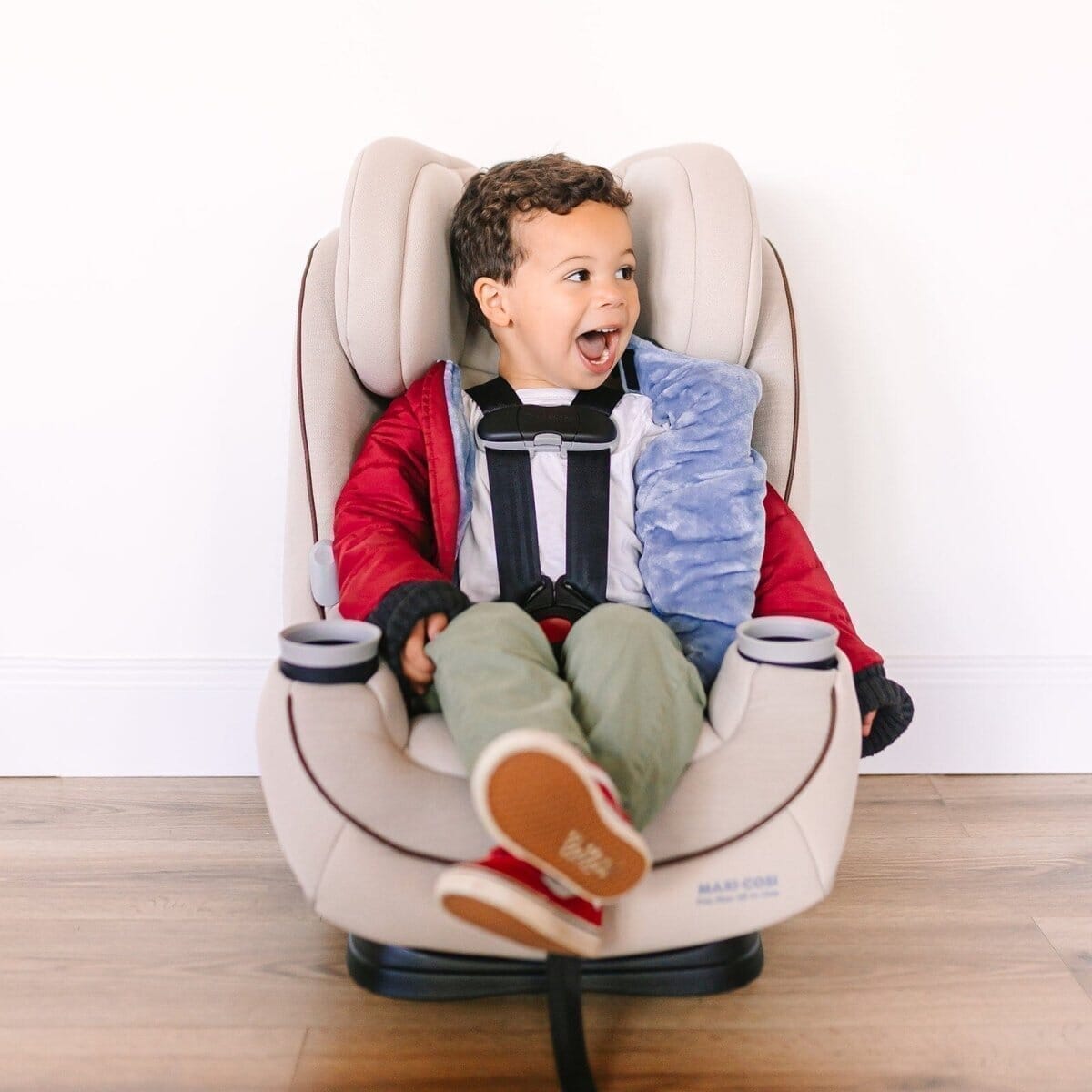
For cold-weather car rides, avoid thick coats or puffy layers under the harness. Instead, use car seat-safe warmth like Car Seat Coats or Car Seat Blankies.
How to Prevent Blowouts During Errands
Blowouts during errands are stressful because you are away from home and usually trying to get something done quickly.
Before leaving the house:
- Change your baby
- Check diaper fit
- Pull out leg cuffs
- Pack an extra outfit
- Bring wipes
- Bring a wet bag or plastic bag
- Keep errands short if possible
- Use Blockerz if blowouts happen often
For busy outings, Buckle Me Baby’s Safety Must Haves collection can also help with everyday errands, parking lots, and on-the-go moments.
What to Keep in a Blowout Kit
Even when you do everything right, blowouts can still happen. A small blowout kit makes cleanup easier.
Blowout kit essentials:
- Diapers
- Wipes
- Changing pad
- Extra outfit
- Wet bag or plastic bag
- Burp cloth or small towel
- Hand sanitizer
- Backup pajamas
- Extra Blockerz
Keep one kit in your diaper bag and one in the car if blowouts happen often.
Common Mistakes That Can Cause Blowouts
Forgetting the leg cuffs
Tucked-in leg cuffs are an easy mistake. Pull them out every time.
Waiting too long between changes
A full diaper has less room to handle poop.
Using the wrong size
Too small and too big can both cause blowouts.
Ignoring repeated patterns
If every blowout happens up the back, focus on back coverage and size. If every blowout happens at the legs, check cuffs and thigh fit.
Not changing before car rides
Car seats put pressure on diapers, so a fresh diaper before the ride can help.
Are Baby Blowouts Normal?
Yes, occasional baby blowouts are normal, especially during the newborn and early baby months. Babies grow quickly, poop changes often, and diaper fit can shift from week to week.
But if blowouts are happening constantly, it is worth checking diaper size, fit, brand, leg cuffs, and timing.
If your baby seems sick or the stool seems unusual, call your pediatrician.
FAQs About Preventing Baby Blowouts
How do I stop baby blowouts?
Start by checking diaper size, fastening the diaper snugly, pulling out the leg cuffs, and changing your baby before naps, bedtime, errands, and car rides.
Do blowouts mean the diaper is too small?
Sometimes. If blowouts keep going up the back, the diaper may be too small or sitting too low.
Can a diaper be too big and cause blowouts?
Yes. If the diaper is too big, gaps around the legs or waist can let poop escape.
Why does my baby have blowouts in the car seat?
Car seat blowouts happen because sitting puts pressure on the diaper and can push poop up the back or out the sides.
What helps prevent blowouts up the back?
Pull the diaper higher in the back, make sure it is not too small, fasten it snugly, and use Blockerz for added protection.
Can Blockerz help prevent blowout messes?
Yes. Blockerz can help add a protective layer when diapers do not fully contain the mess, especially in car seats, strollers, cribs, and during travel.
Final Thoughts
You may not be able to prevent every baby blowout, but you can reduce how often they happen. Start with diaper size, diaper fit, leg cuffs, and timing. Then add extra protection during high-risk moments like car rides, naps, errands, and travel.
For parents dealing with repeat blowouts, Buckle Me Baby’s Blockerz are made to help protect clothes, car seats, cribs, strollers, and everyday routines from messy surprises.
You can also pair Blockerz with other Buckle Me Baby essentials:
Share:
Shop clothes that makes your life easier

Let customers speak for us
Anonymous
Great!
Great!
Buckle Me Baby

Anonymous
Perfect
Perfect for cold Alaska winters!
Car Seat Blankies

Zofia
Cute colours and the jammies really work, no mess
Cute colours and the jammies really work, no mess in the car seat!
Blowout Blockerz Bamboo Jams
Anonymous
great
great idea
Car Seat Blankies
Karen E.
Love everything about it including the price and
Love everything about it including the price and quick delivery
Car Seat Blankies

Krystin
I love this car seat blanket! It is so warm
I love this car seat blanket! It is so warm and soft. My granddaughter enjoys wearing it on cold mornings in the car. Definitely very happy with this purchase!
Clearance 2025 Cozier Car Seat Blankie

Laura H.
I don't usually write reviews
But this is our 3rd winter with one of these coats, and they're a lifesaver. Slight learning curve when you first get one, but not having to take the coat on and off in the cold is worth it. It's also piece of mind that it won't fall off when driving or if in an accident (kiddo will be warm when waiting for first responders). We live in Chicago and the Toast is warm enough for quick errands and the Toasty is nicer for deep winter. We do have a larger parka coat if we spend more time outdoors.
Clearance Buckle Me Baby Car Seat Coat
Jama L.
Amazing!
This is absolutely amazing.. kept our granddaughter toasty warm on a cold night kicking off the Christmas holiday in Tennessee!
Clearance 2025 Cozier Car Seat Blankie

Esther G.
Great quality, great service
Shipping was super fast and the snowsuit feels like quality! I love the warm cuffs on the neck and sleeves. I got moonwalker so it can be gender nautral for future kids but it can pass as purple with certain lighting.
Infant Car Seat Snowsuits
Anonymous
Better than expected
I had the lightest version which was nice for all year, but with colder days coming I ordered this version and its better than expected. Definitely thick but not too heavy, well-made and baby loves it!
Clearance 2025 Cozier Car Seat Blankie

Aisha S.
Best pjs EVER!
I have tried bamboo pajamas from SO many different brands, but none are as good as the BMBC pjs. They're actually buttery soft, hold up extremely well in the wash, and my baby can wear them for so long due to the extendable arms/legs and stretchy material. My 14 month old is 95th percentile for height and weight and the 6/9 month BMBC pjs still fit him!!! Cannot recommend this company enough. And Dahlia, the owner, is so sweet and responsive.
Clearance Bamboo Jams

JoAnn H.
Adoreable
So cute and so soft
Wild Child Bamboo Jams

Amy a.M.P.
So cozy and warm!
This is so easy to use in the car and instantly warm.
Clearance Kids 2025 Coziest Car Seat Blankie
debi B.
Car seat blanket
great product! So soft and cozy bought for my 6 month old grandson. Had to roll the sleeves up a bit but it will fit him. Next winter too ! Would recommend !
Clearance Kids 2025 Coziest Car Seat Blankie
Gigi
“These are perfect”, says my granddaughter who has 12 month old twins. They are safe in their seatbelts and stay covered and warm. The Velcro in the back is great. She says to give these blankies a 5 star rating.
Clearance Kids 2025 Coziest Car Seat Blankie